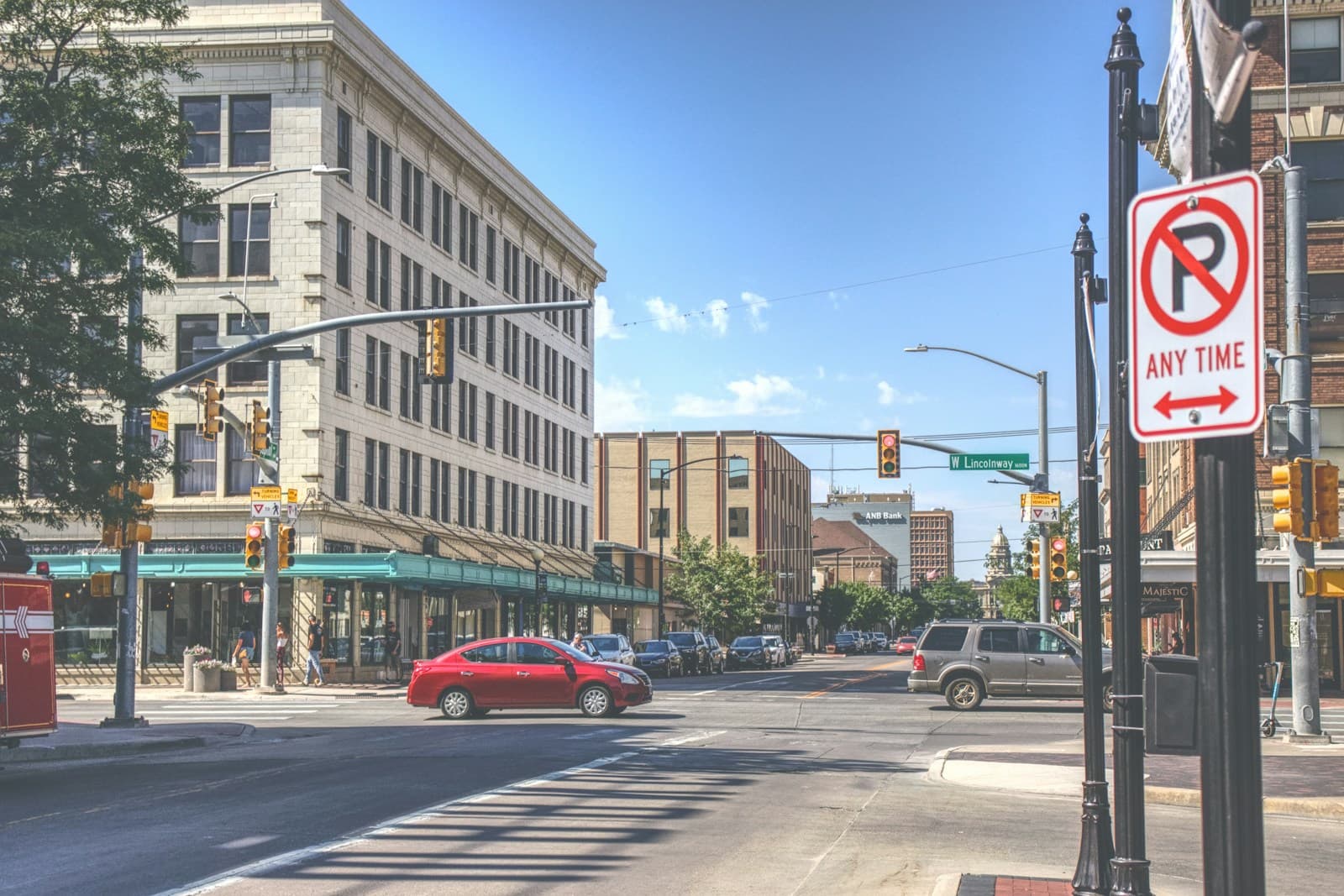
What Affects Rates in Cheyenne
- Students attending schools along College Drive and Pershing Boulevard frequently use I-25 on-ramps during peak commute windows, creating merge risk for inexperienced drivers. Parents whose teens routinely access I-80 for work or extracurriculars face higher collision coverage claims in this corridor. Insurers in Cheyenne often weight highway mileage more heavily for drivers under 18 than they do in smaller Wyoming towns where interstate access is less frequent.
- LCSD1 high schools—East, Central, and South—draw students from across Cheyenne's suburban sprawl, meaning few teens walk to class and most drive or carpool daily. Morning arrival windows between 7:15 and 7:45 a.m. concentrate young drivers on Dell Range Boulevard, Lincolnway, and Missile Drive, raising fender-bender frequency. Collision coverage becomes more relevant for Cheyenne parents than it might in compact Wyoming towns where school parking lots see less daily turnover.
- Cheyenne's 6,062-foot elevation and exposure to Canadian air masses deliver snow and ice from October through April, giving teen drivers longer seasonal hazard windows than Casper or Rock Springs. Black ice forms quickly on overpasses along I-25 and Yellowstone Road during temperature swings, a risk inexperienced drivers often misjudge. Parents adding a teen mid-school-year should verify that comprehensive coverage includes glass replacement, as gravel trucks and freeze-thaw cycles crack windshields more frequently on Cheyenne highways.
- Teens working retail shifts at Frontier Mall or part-time positions along Dell Range Boulevard accumulate higher annual mileage than peers in denser cities where jobs cluster near residential zones. Insurance telematics programs penalize high weekly mileage, so Cheyenne parents whose students drive 150+ miles per week may see smaller discounts from usage-based policies than expected. Conversely, students attending Laramie County Community College locally instead of commuting to Laramie reduce highway exposure and may qualify for lower collision premiums.
- Cheyenne Transit Program operates limited fixed routes that do not serve all high school campuses or typical teen employment hubs, meaning nearly every licensed 16-year-old becomes a regular driver rather than an occasional one. This contrasts sharply with urban markets where teens drive only on weekends, lowering their risk profile. Insurers in Cheyenne assume higher annual claim probability for student drivers, which is why adding a teen to a parent's policy here often triggers surcharges at the top end of the statewide range.
See what adding a teen driver actually costs in your state
Compare quotes from carriers that offer good student discounts — most parents find savings they didn't know were available.
Get Your Free QuoteCoverage Recommendations
Cost estimates are based on available industry data and vary by driver profile. These are not insurance quotes.
Liability Insurance
Cheyenne parents often select 100/300/100 limits instead of state minimums because I-25 and I-80 crashes involving multiple vehicles can exceed 25/50/20 thresholds quickly.
Required; higher limits add $15–$40/monthEstimated range only. Not a quote.
Collision Coverage
Morning and afternoon congestion at East High, Central High, and South High parking lots produces frequent low-speed contact claims, making collision coverage a priority for parents whose students drive newer vehicles.
Adds $80–$150/month for teen driversEstimated range only. Not a quote.
Comprehensive Coverage
Cheyenne's hail season from May through August and deer crossings on Happy Jack Road and I-80 west of the city create year-round comprehensive claim risk for student drivers unfamiliar with evasive techniques.
Adds $30–$60/month for teen driversEstimated range only. Not a quote.
Uninsured Motorist Coverage
Wyoming does not require uninsured motorist coverage, but Cheyenne agents recommend it for teens because I-25 and I-80 see transient out-of-state traffic with varying compliance levels.
Adds $10–$25/monthEstimated range only. Not a quote.