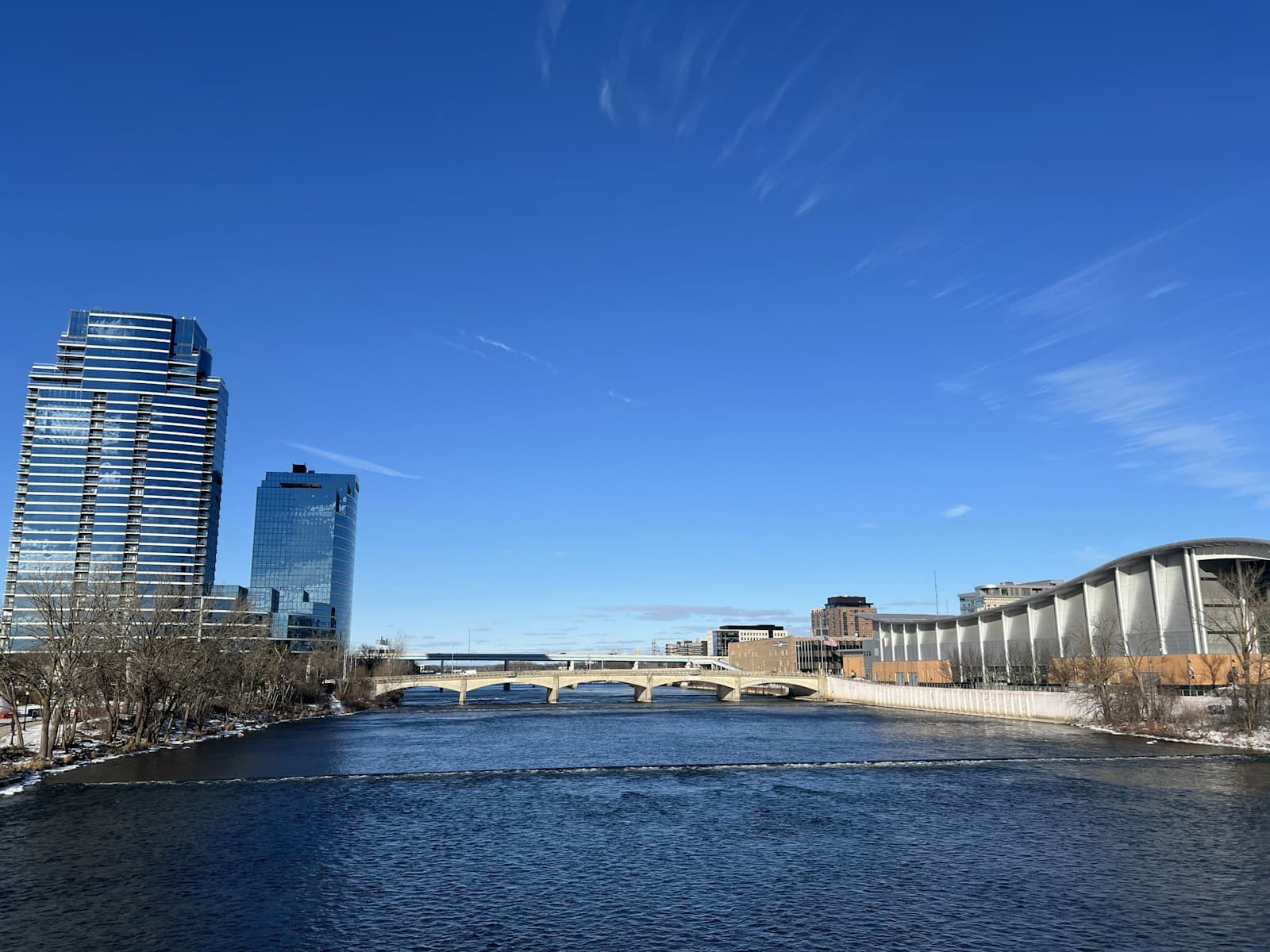
What Affects Rates in Grand Rapids
- The 28th Street commercial strip between East Beltline and Kentwood experiences heavy congestion and frequent rear-end collisions, particularly near Woodland Mall and RiverTown Crossings access points where teen drivers misjudge braking distances. Parents whose teens commute to jobs in this retail corridor should prioritize collision coverage with lower deductibles, as even minor parking lot incidents in these high-traffic areas result in claims. This corridor's claim frequency makes it a rate-increasing factor for Grand Rapids families compared to teens driving primarily residential routes in Ada or Cascade.
- Teens attending Forest Hills Central, Northern, or Eastern high schools often use East Beltline (M-37) for morning commutes, where 45–50 mph speed limits and multi-lane merges near I-96 interchanges create higher accident severity than urban grid streets. The mix of commercial driveways and highway-speed through traffic between 28th Street and Knapp Street results in sideswipe and merge-related claims for inexperienced drivers. Families in this commute zone see higher liability-insurance requirements reflected in premium calculations due to the corridor's accident patterns.
- Grand Rapids receives lake-effect snow from November through March, and the city's grid system with frequent stop signs on Division Avenue, Eastern Avenue, and Plainfield Avenue creates repetitive braking scenarios where teen drivers lose traction control. Black ice forms quickly on the bridges crossing I-196 and US-131, particularly the Leonard Street and Wealthy Street overpasses where teens commuting between the city's northeast and southwest quadrants encounter elevated crash risk. Collision-coverage becomes cost-effective for parents in Grand Rapids given the seasonal claim spike, unlike Michigan's southern cities with lighter snowfall.
- Teen drivers working or attending Grand Valley State University's downtown campus face higher comprehensive coverage costs due to street parking theft risk along Monroe Avenue and Fulton Street, where vehicle break-ins for electronics occur more frequently than in suburban Wyoming or Jenison. The urban environment's parking density also increases door-ding and mirror-strike incidents that trigger collision claims. Parents should evaluate whether comprehensive coverage with a $500 deductible is justified based on where their teen parks daily, as downtown exposure materially affects rate calculations.
- Grand Rapids' urban core has higher uninsured motorist rates than surrounding Kent County suburbs, particularly in the densely populated zones west of US-131 and south of I-196 where enforcement of insurance compliance is less consistent. Teen drivers navigating Division Avenue, Grandville Avenue, and Chicago Drive face elevated risk of being hit by uninsured drivers, making uninsured-motorist-coverage particularly valuable despite the added premium cost. This coverage protects parents from out-of-pocket medical bills if their teen is injured by an uninsured driver on these high-traffic urban routes.
See what adding a teen driver actually costs in your state
Compare quotes from carriers that offer good student discounts — most parents find savings they didn't know were available.
Get Your Free QuoteCoverage Recommendations
Cost estimates are based on available industry data and vary by driver profile. These are not insurance quotes.
Liability Insurance
Grand Rapids' multi-lane corridors like East Beltline and I-196 interchanges create higher-severity accidents where inexperienced teen drivers merge into traffic, making limits above state minimums critical for protecting family assets.
Required; higher limits add $30–$60/mo for teensEstimated range only. Not a quote.
Collision Coverage
The 28th Street retail corridor and downtown parking environments produce frequent low-speed impacts and parking lot claims that make collision coverage cost-effective for Grand Rapids families, especially during winter months when icy intersections increase incident rates.
Adds $120–$200/mo for teen driversEstimated range only. Not a quote.
Comprehensive Coverage
Downtown Grand Rapids street parking along Monroe Avenue and near GVSU's Pew Campus carries theft and break-in risk that suburban Kent County locations avoid, making comprehensive coverage valuable for teens working or attending school in the urban core.
Adds $40–$80/mo for teen driversEstimated range only. Not a quote.
Uninsured Motorist Coverage
Grand Rapids' urban zones west of US-131 have higher uninsured driver rates than surrounding suburbs, and busy arterials like Division Avenue and Grandville Avenue increase exposure to drivers without proper coverage, making this protection particularly relevant for city-based teens.
Adds $25–$50/mo for teen driversEstimated range only. Not a quote.
Medical Payments Coverage
While Michigan's no-fault PIP covers most medical costs, MedPay provides immediate payment for minor injuries from the fender-benders common on Grand Rapids' congested 28th Street without triggering a full PIP claim that could affect future rates.
Adds $8–$15/mo for teen driversEstimated range only. Not a quote.