What Affects Rates in Norwalk
- Teen drivers commuting to Norwalk High School or Brien McMahon High School frequently use I-95 on-ramps at exits 14–16, where merging speeds exceed 60 mph during morning and evening peaks. Parents adding teens to policies should prioritize collision coverage with lower deductibles, as rear-end accidents and sideswipe incidents are common for inexperienced drivers navigating these high-density interchanges. The stretch between the Norwalk River and Westport sees particularly heavy volume during school dismissal hours.
- Route 7 north through Norwalk toward Wilton and the Merritt Parkway's winding exits create hazards for new drivers unfamiliar with limited sightlines and tight turning radii. Winter ice accumulates on Merritt Parkway overpasses near exits 39 and 40, where teen drivers often brake too late on curved ramps. Comprehensive coverage becomes relevant for parents whose teens park at Norwalk Community College or travel these routes regularly, as guardrail contact and single-vehicle incidents increase during November through March.
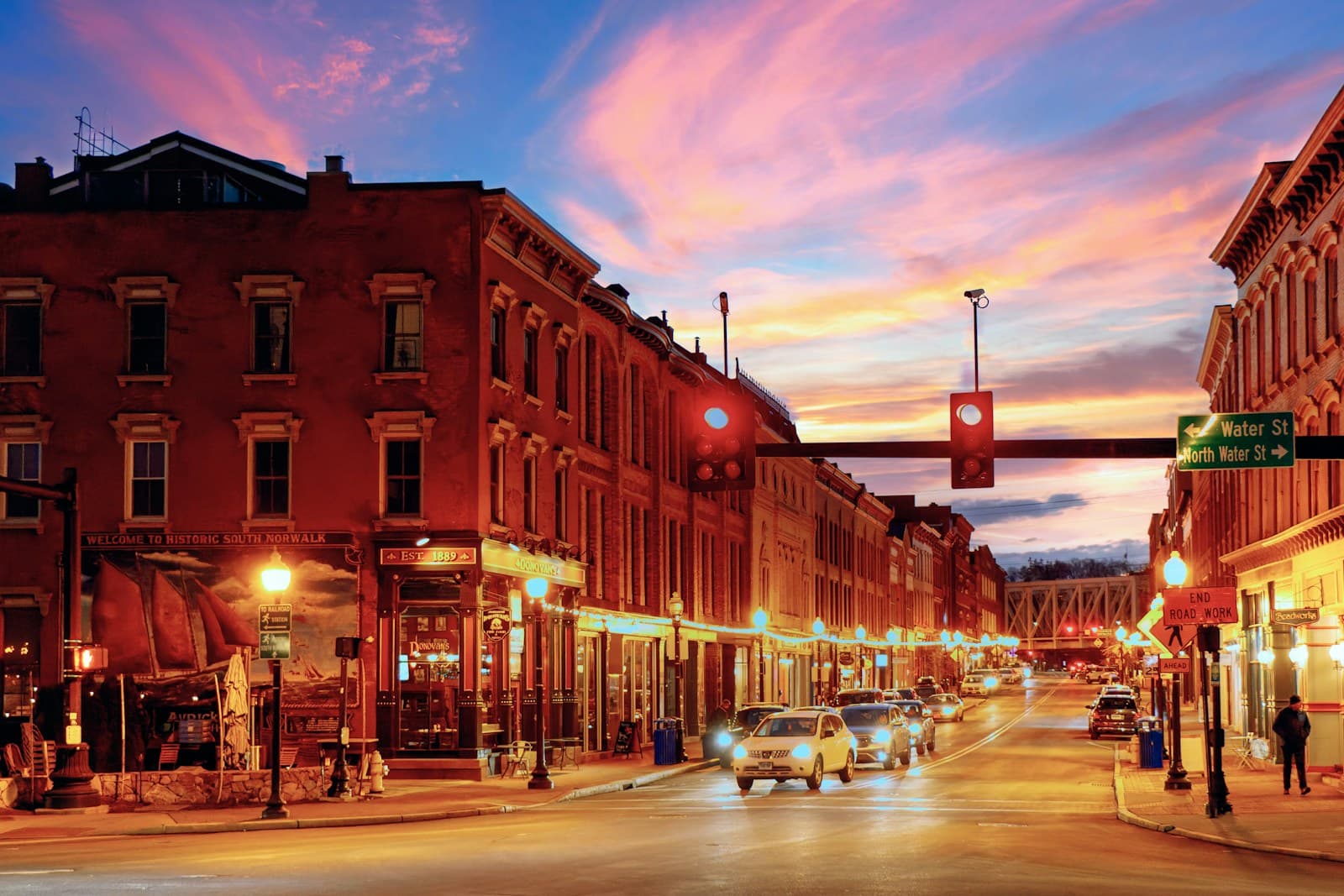
- Teen drivers working retail or restaurant jobs in South Norwalk's Washington Street district face tight parallel parking, angled street spaces, and pedestrian crossings near the SoNo Collection and Maritime Aquarium. Door dings, backing incidents in municipal lots off North Water Street, and low-speed collisions in the Stroffolino Bridge area drive up collision claims for drivers under 20. Parents should evaluate whether $500 deductibles justify the premium savings versus $1,000 options given the frequency of minor parking damage.
- Norwalk's suburban layout means many teens drive from neighborhoods like Rowayton, Silvermine, and Cranbury to centralized high schools, adding 10–20 miles daily to household mileage. This pattern increases the likelihood of distracted driving incidents on residential roads like Grumman Avenue and West Avenue, where side streets intersect collector roads without signals. Telematics programs monitoring hard braking and speed can offset some of the teen driver surcharge if students demonstrate safe habits on these repetitive routes.
- Connecticut's graduated licensing law prohibits 16-year-old license holders from driving between 11 p.m. and 5 a.m. and restricts passengers during the first six months, reducing nighttime accident risk for Norwalk families. However, enforcement gaps on weekend nights near Calf Pasture Beach and Veteran's Park mean some teens still drive outside permitted hours, potentially voiding coverage if an at-fault accident occurs during restricted times. Parents should confirm their insurer's position on graduated license violations before assuming full protection.
See what adding a teen driver actually costs in your state
Compare quotes from carriers that offer good student discounts — most parents find savings they didn't know were available.
Get Your Free QuoteCoverage Recommendations
Cost estimates are based on available industry data and vary by driver profile. These are not insurance quotes.
Liability Insurance
Norwalk parents should consider limits above Connecticut's 25/50/25 minimums given the risk of multi-vehicle pileups on I-95 during rush hour, where a single teen driver error can involve several cars and exceed basic coverage.
State minimum increases premium by $80–$140/mo for teens; higher limits add $20–$40/mo moreEstimated range only. Not a quote.
Collision Coverage
High-frequency incidents on Norwalk's I-95 on-ramps and in SoNo parking areas make collision coverage essential for parents whose teens drive newer vehicles, as repair costs for even minor merging accidents or parking lot contact often exceed $2,000.
Adds $120–$220/mo for teen drivers with $500–$1,000 deductibleEstimated range only. Not a quote.
Uninsured Motorist Coverage
Fairfield County's uninsured driver rate hovers near 11%, meaning Norwalk teens have a measurable chance of being hit by an uninsured motorist on Route 7 or in East Norwalk's commercial corridors where out-of-state commuters frequently travel.
Adds $15–$35/mo for teen driversEstimated range only. Not a quote.
Comprehensive Coverage
Winter ice storms affecting the Merritt Parkway and Norwalk's coastal roads create tree-fall and weather damage risk for teen drivers parking outdoors at Norwalk High School or Brien McMahon High School, making comprehensive worthwhile for vehicles valued above $8,000.
Adds $40–$80/mo for teen driversEstimated range only. Not a quote.
Medical Payments Coverage
Norwalk's proximity to Norwalk Hospital and emergency services along I-95 means ambulance and ER costs can be covered immediately through MedPay, reducing out-of-pocket expenses if your teen is injured in a Route 7 or Merritt Parkway incident before health insurance processes claims.
Adds $8–$18/mo for $5,000 coverageEstimated range only. Not a quote.