What Affects Rates in Anchorage
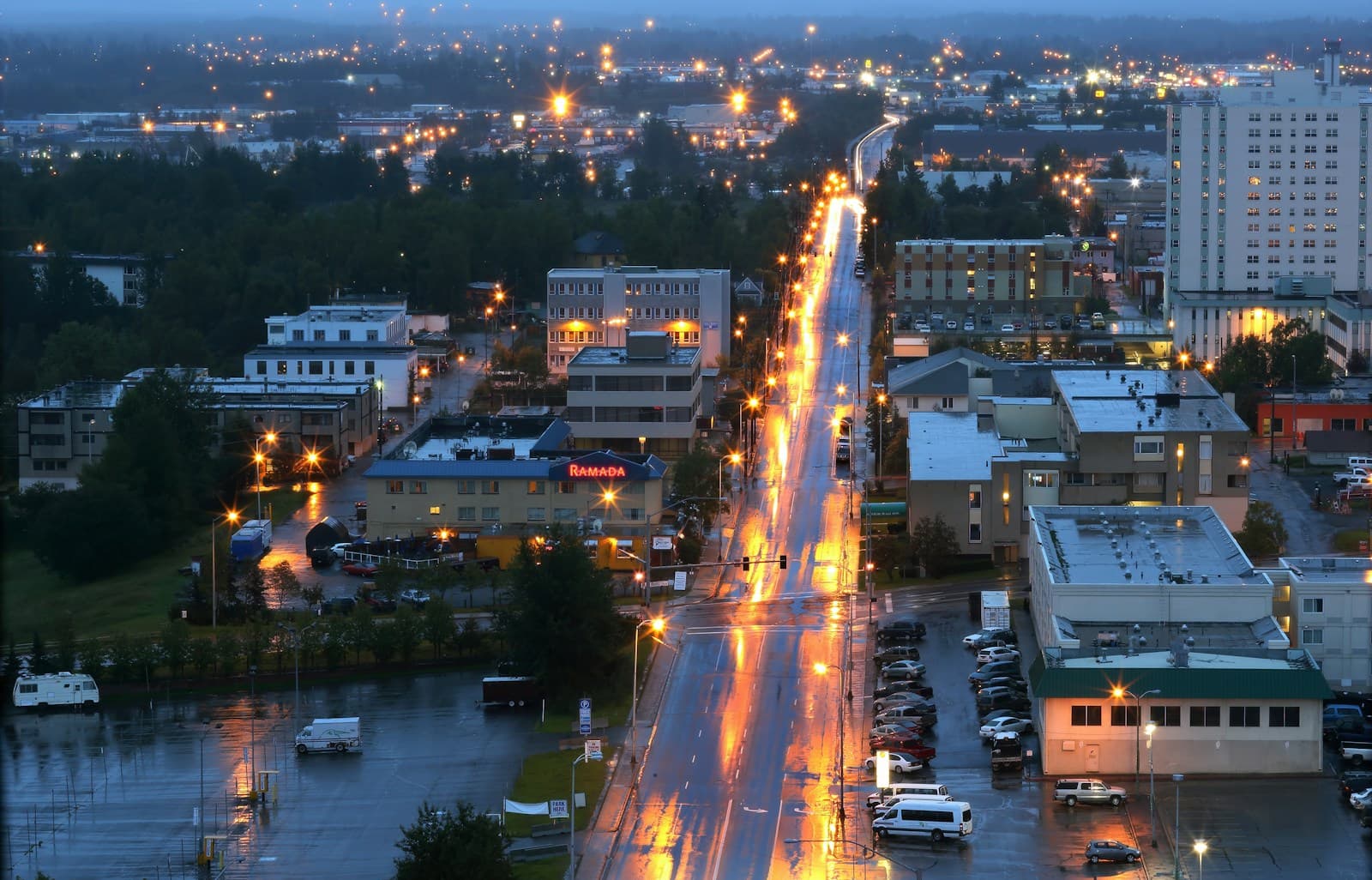
- Teens attending East, Bartlett, or Chugiak High Schools frequently drive segments of the Glenn Highway, where winter ice patches between Muldoon and Eagle River contribute to higher collision rates for inexperienced drivers navigating highway speeds in dark morning hours. Parents should verify collision coverage deductibles match their comfort level with winter highway risk, as fender-benders on Glenn Highway on-ramps during October through March claim surges are common for drivers under 19. The highway's mix of 55–65 mph traffic and sudden slowdowns at Hiland Road and Muldoon exits challenges teens still developing hazard recognition in low-visibility conditions.
- Anchorage's concentration of teen employment and social destinations at Dimond Center, Tikahtnu Commons, and the Midtown mall district creates elevated parking lot collision and door-ding risk that directly affects whether parents choose $500 versus $1,000 collision deductibles. Teen drivers working retail or food service shifts park in high-turnover lots where backing incidents and shopping cart damage occur more frequently than in suburban or rural settings. The frozen, rutted parking surfaces from November through April further increase low-speed collision frequency, making comprehensive coverage for parking lot incidents particularly relevant for Anchorage families with teen drivers.
- Unlike rural Alaska, Anchorage teens encounter moose in urban corridors along Minnesota Drive, the Coastal Trail area, and residential streets in South Anchorage and Eagle River, creating animal collision risk within city limits that affects comprehensive coverage decisions. Moose-vehicle collisions peak during dark winter mornings when teens drive to school, with University Lake, Kincaid Park, and Far North Bicentennial Park areas seeing frequent moose movement across roads teen drivers use daily. Comprehensive coverage becomes essential for Anchorage teen drivers in ways it might not for families in Fairbanks or Juneau, where moose encounters concentrate outside urban commute routes.
- Anchorage teens drive to school and work during complete darkness from November through February, with morning school commutes occurring in 4–5 hours of daily daylight that amplifies inexperienced driver risk on icy roads. The combination of black ice formation on Lake Otis Parkway, C Street, and Old Seward Highway during teens' 7–8 AM school drives creates collision frequency that insurers price into Anchorage urban rates. Parents should consider whether telematics programs that monitor hard braking and nighttime driving might offset premium increases, as winter darkness driving constitutes the majority of teen behind-the-wheel hours in Anchorage compared to Lower 48 cities.
- Teens parking near employment locations in downtown Anchorage, Spenard, and Midtown face vehicle theft and break-in rates higher than Alaska's rural communities, making comprehensive coverage a practical necessity rather than optional protection. The concentration of teen jobs along Spenard Road, Northern Lights Boulevard, and downtown's 4th and 5th Avenue corridors places teen-driven vehicles in areas where catalytic converter theft and smash-and-grab incidents occur regularly. Anchorage parents should verify comprehensive deductibles and whether their insurer covers aftermarket anti-theft devices, as urban theft exposure differs substantially from what families in Palmer, Wasilla, or Kenai experience.
See what adding a teen driver actually costs in your state
Compare quotes from carriers that offer good student discounts — most parents find savings they didn't know were available.
Get Your Free QuoteCoverage Recommendations
Cost estimates are based on available industry data and vary by driver profile. These are not insurance quotes.
Liability Insurance
Anchorage's winter Glenn Highway and Seward Highway congestion increases rear-end collision risk for inexperienced teen drivers, making liability limits above state minimums prudent for parents protecting home equity and assets.
State minimum required; higher limits add $40–$80/moEstimated range only. Not a quote.
Collision Coverage
Minnesota Drive, Lake Otis Parkway, and C Street ice accumulation from October through March creates frequent teen driver slide-offs and fender-benders that make collision coverage essential for Anchorage families unless the vehicle value is very low.
Adds $180–$320/mo for teen driversEstimated range only. Not a quote.
Comprehensive Coverage
Urban moose encounters on Minnesota Drive and University Lake area roads, plus theft risk in Spenard and downtown employment parking lots, make comprehensive coverage particularly valuable for Anchorage teen drivers compared to rural Alaska families.
Adds $80–$150/mo for teen driversEstimated range only. Not a quote.
Uninsured Motorist Coverage
Anchorage's higher uninsured driver rate in Midtown, Mountain View, and Spenard neighborhoods increases the likelihood your teen encounters an uninsured motorist in parking lots or on congested winter roads where hit-and-runs occur more frequently.
Adds $30–$60/mo for teen driversEstimated range only. Not a quote.
Medical Payments Coverage
Winter accidents on the Glenn Highway between Muldoon and Eagle River can involve delayed emergency response times despite Anchorage's urban setting, making immediate medical payments coverage valuable for teen driver injuries before health insurance processes claims.
Adds $15–$35/moEstimated range only. Not a quote.