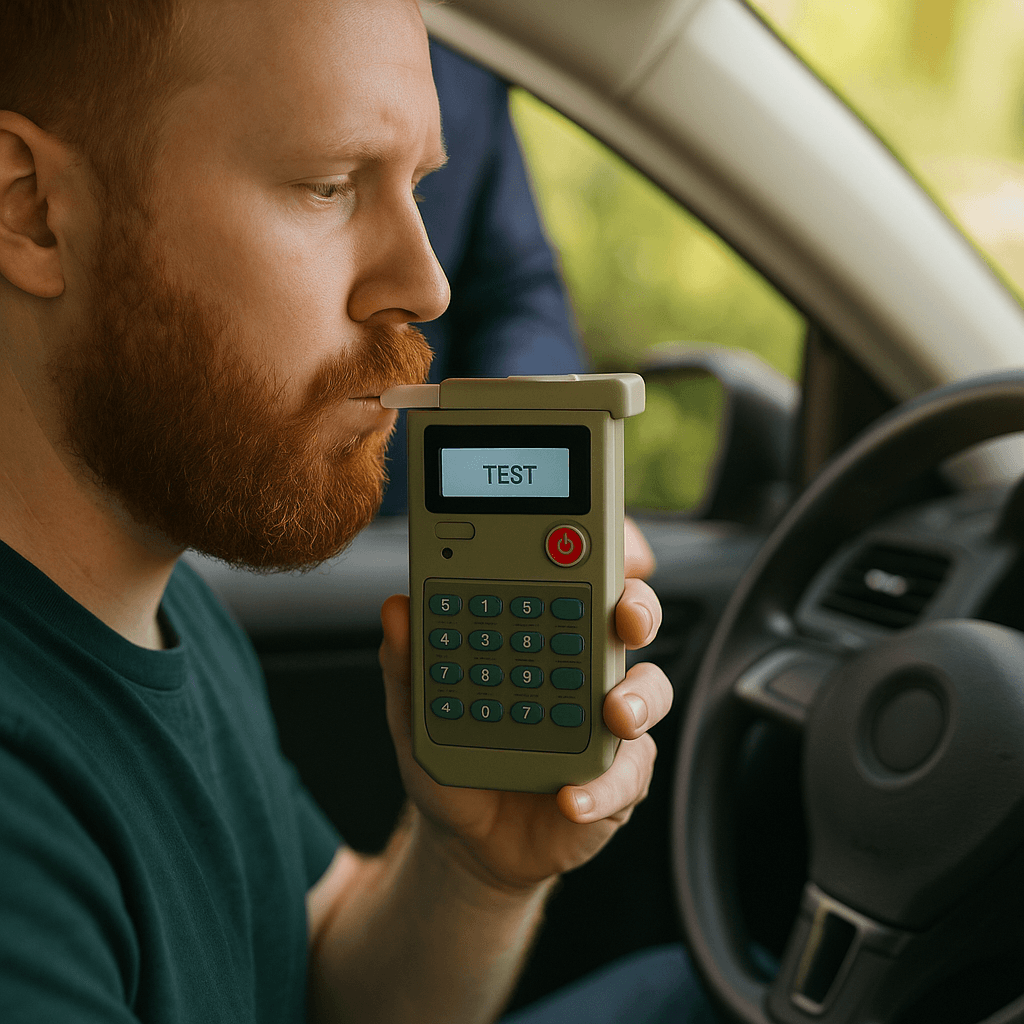
If your teen received a DUI, license suspension, or serious traffic violation, you may need to file SR-22 insurance — and deciding whether to add them to your policy or make them get standalone coverage changes both your premium and your legal exposure.
Who Files SR-22 When a Teen Driver Gets a Violation
When a teen under 18 receives a serious traffic conviction — DUI, reckless driving, driving without insurance, or accumulating multiple violations in a short period — the state requires proof of financial responsibility before reinstating or maintaining driving privileges. That proof is the SR-22 certificate, and in most states, the parent must file it if the teen is listed on the parent's policy.
If your 17-year-old is already on your policy and gets a DUI, your insurance carrier files the SR-22 in your name as the policyholder. The state monitors compliance under your policy number. If the policy lapses or is canceled during the required filing period — typically three years — the carrier notifies the DMV, and your license gets suspended along with your teen's. This is not theoretical: in states like California, Florida, and Texas, parent license suspensions due to teen SR-22 lapses are processed automatically within 10 days of the lapse notification.
The alternative is to remove the teen from your policy and require them to purchase a standalone non-owner SR-22 policy or, if they own a vehicle, an owner SR-22 policy in their own name. This shifts the filing responsibility and compliance liability entirely to the teen. The tradeoff: standalone SR-22 policies for high-risk teen drivers typically cost $200–$400/month, compared to adding SR-22 to an existing family policy, which raises the premium by an additional $50–$150/month on top of the already elevated teen driver surcharge.
Cost Breakdown: Adding SR-22 to Your Policy vs. Standalone Teen Coverage
Filing SR-22 itself costs $15–$50 as a one-time or annual certificate fee, depending on the carrier and state. That's not the cost parents worry about. The real expense is the premium increase that follows the underlying violation.
Before the violation, adding a 16-year-old to a parent's policy in a mid-cost state like Ohio or North Carolina typically raises the annual premium by $2,400–$3,600 ($200–$300/month). After a DUI or reckless driving conviction requiring SR-22, expect that same teen to add $4,800–$7,200/year ($400–$600/month) to the family policy. The SR-22 filing requirement adds duration risk — most violations require three years of continuous coverage without lapse — but the violation surcharge is what drives the cost.
If the teen gets a standalone SR-22 policy, the monthly cost ranges from $200/month for a non-owner policy (teen doesn't own a vehicle, needs SR-22 to reinstate a suspended license) to $350–$500/month for an owner policy with state minimum liability limits. Full coverage on a teen-owned vehicle with SR-22 often exceeds $600/month in high-cost states like Michigan or Louisiana.
Parents choosing to keep the teen on the family policy absorb the cost increase but retain control over payment and compliance. Parents who remove the teen take on zero SR-22 liability but must verify the teen maintains continuous independent coverage — because if the teen's policy lapses and the teen is caught driving, the parent's vehicle can be impounded if the teen was driving a family car, even if the parent wasn't aware of the lapse.
See what adding a teen driver actually costs in your state
Compare quotes from carriers that offer good student discounts — most parents find savings they didn't know were available.
Get Your Free Quote✓ Good Student Discounts✓ No Obligation✓ Licensed Carriers✓ All 50 States
When Removing a Teen From Your Policy Backfires
Removing a teen from your policy to avoid the SR-22 filing responsibility sounds clean on paper. In practice, it creates three failure points most parents don't anticipate until they're dealing with the consequences.
First: if the teen still lives in your household and has access to your vehicles, many carriers require you to list them as an excluded driver. An excluded driver endorsement means if that teen drives your car — even in an emergency — the carrier denies the claim entirely. No liability coverage, no collision, no comprehensive. You're personally liable for all damages and injuries. In Florida and California, excluded driver endorsements are binding even if the parent didn't realize the teen was driving.
Second: if the teen's standalone SR-22 policy lapses, the state suspends the teen's license, but the teen may continue driving without telling you. If they're pulled over in your vehicle, the car can be impounded on the spot, and you'll pay $200–$500 in towing and storage fees to retrieve it. In states with strict SR-22 compliance tracking, a second lapse can extend the SR-22 requirement by an additional year.
Third: most parents removing a teen from their policy assume the teen will actually purchase and maintain standalone coverage. In reality, fewer than 60% of high-risk teen drivers maintain continuous coverage in the first 12 months after being removed from a parent's policy, according to industry compliance data. The gap between removal and the teen securing their own policy is when uninsured driving incidents spike.
How Long Parents Stay Liable and What Ends the Requirement
SR-22 filing periods are set by the state, not the insurance carrier. The most common duration is three years from the date of conviction or license reinstatement, but some states impose shorter or longer terms depending on the violation type. In Virginia, a DUI under age 21 requires three years of SR-22. In California, a DUI conviction requires three years, but an at-fault uninsured accident can require SR-22 for up to five years.
The clock starts when the court orders SR-22 or when the DMV requires it as a condition of license reinstatement. If the teen's license was suspended for six months before SR-22 is filed, the three-year period typically begins after reinstatement, not from the date of conviction. Missing this timing detail is why some families assume they're two years into compliance when the state records show they're only 18 months in.
Continuous coverage means zero lapses. If your policy cancels for non-payment and you reinstate it three days later, the carrier must file an SR-26 (notice of lapse) with the state. Even a one-day lapse resets the compliance clock in many states or extends the requirement. The only way to end SR-22 early is if the state grants a hardship waiver or the court vacates the underlying conviction — both are rare and require legal action.
Once the filing period ends and the carrier confirms continuous coverage, you must request SR-22 removal in writing. Carriers do not automatically stop filing. If you don't request termination, some carriers continue filing indefinitely and continue charging the certificate fee.
Shopping for SR-22 Coverage: What Parents Need Before Calling Carriers
Not all carriers file SR-22, and many standard carriers will non-renew a policy after a teen's high-risk violation rather than continue coverage. If your current carrier is State Farm, Geico, or Progressive, call them first — all three file SR-22 in most states and may retain you with a surcharge rather than force you into the non-standard market. If your carrier non-renews or doesn't file SR-22, you'll need to shop high-risk or assigned-risk carriers.
Before requesting quotes, gather: the teen's driver's license number, the conviction date and statute code, the court case number, and the DMV letter specifying the SR-22 requirement and duration. Quotes without this documentation are estimates only — actual premiums depend on the exact violation and the state's classification. A DUI and a reckless driving charge may both require SR-22, but the surcharge differs by 20–40% depending on the carrier's underwriting model.
When comparing quotes, confirm whether the SR-22 filing fee is one-time or annual, whether the policy includes reinstatement fee coverage (pays the state's license reinstatement fee if you comply with SR-22 but still owe the state a separate fee), and whether the carrier reports lapses immediately or allows a grace period. Some non-standard carriers allow a 10-day grace period before filing the lapse notice; others report within 24 hours.
If you're considering standalone coverage for the teen, verify whether the policy is non-owner SR-22 (teen doesn't own a vehicle) or owner SR-22 (teen owns or co-owns the vehicle). A non-owner policy is $80–$150/month cheaper but provides zero coverage if the teen regularly drives a household vehicle. Misclassifying this is the most common reason for claim denials in SR-22 cases.
What Happens If You Don't File or Let Coverage Lapse
If the state requires SR-22 and you don't file within the specified timeframe — usually 30 days from the court order or reinstatement notice — the DMV suspends the teen's license and, if the teen is on your policy, may suspend yours. Reinstatement after a compliance suspension requires proof of SR-22 filing, payment of reinstatement fees ($100–$300 depending on state), and in some states, retaking the written or road test.
If SR-22 is filed but the policy lapses, the carrier sends an SR-26 form to the state within 10–30 days. The state processes the suspension automatically. You won't receive a warning. The first notice most parents get is a suspension letter dated after the effective suspension date, which means if the teen drove during that window, they were driving on a suspended license — a misdemeanor in most states and grounds for vehicle impound, increased fines, and extension of the SR-22 requirement.
Lapse reinstatement is more expensive than initial filing. Expect to pay the lapse reinstatement fee ($150–$250), provide proof of continuous coverage going forward, and in some states, restart the SR-22 clock from zero. One lapse in year two of a three-year requirement can mean you're now in year one of a new three-year term.