Most parents don't realize that a graduated driver's license (GDL) can qualify your teen for a discount — but it's not automatic. You have to ask, document it, and often renew the proof every six months.
Why Graduated Licenses Matter for Premiums — and Why Carriers Don't Advertise It
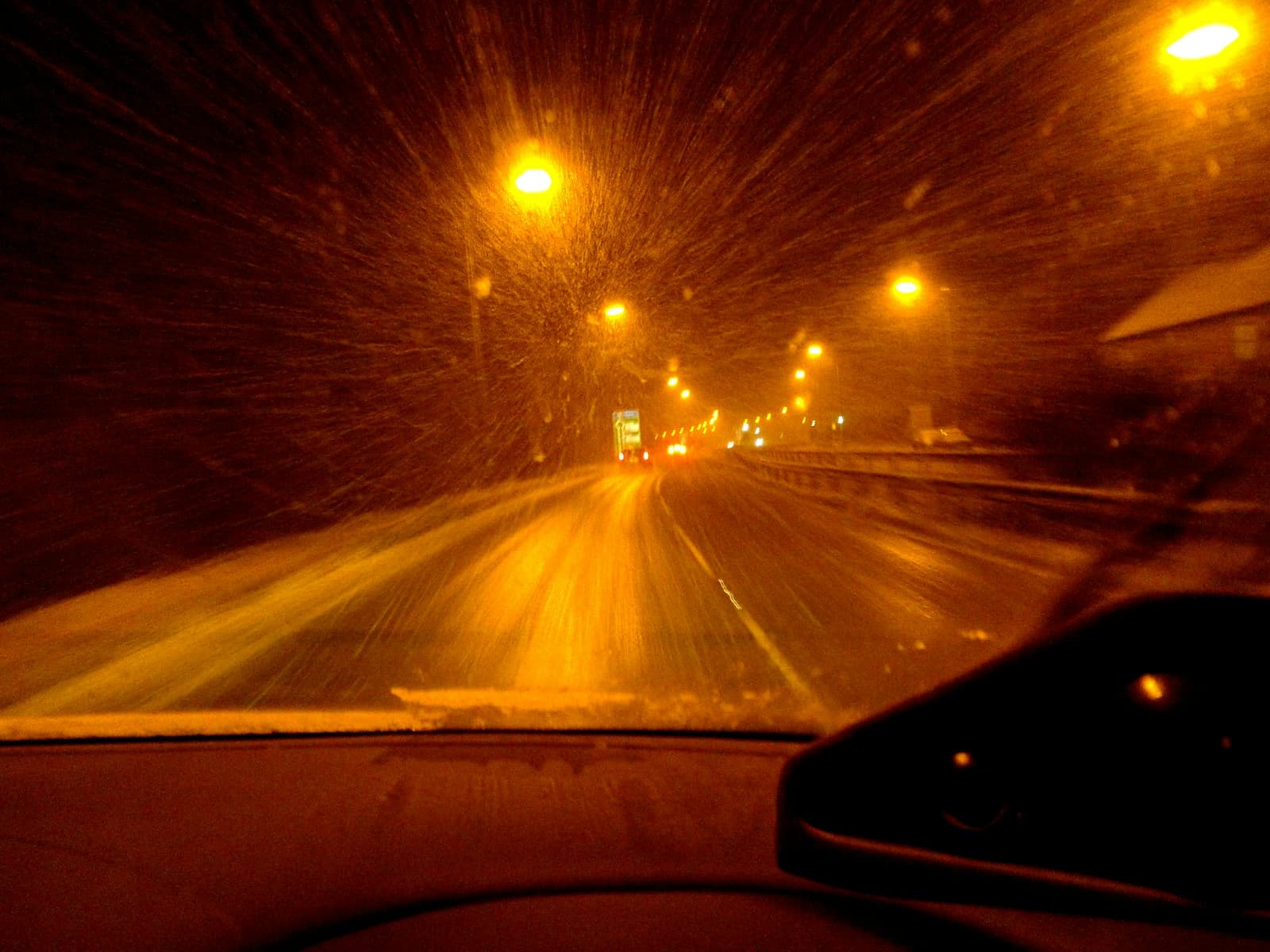
Adding a 16-year-old driver to a parent's policy increases annual premiums by $1,800 to $3,200 depending on state and vehicle, but a teen with a restricted license — one that prohibits nighttime driving or limits passengers — poses statistically lower risk than one with full privileges. The Insurance Institute for Highway Safety (IIHS) confirms that graduated driver licensing (GDL) programs reduce fatal crash rates among 16-year-olds by 20–40%, yet many insurers don't automatically apply a discount when you add a GDL-restricted driver. You have to request it, prove it, and monitor it.
The disconnect happens because carriers assess risk differently. Some classify all newly licensed drivers identically until they hit six months of clean history. Others apply a GDL discount only if you proactively submit a copy of the learner's permit or intermediate license showing curfew and passenger restrictions. If you add your teen to the policy without mentioning the GDL status, you're likely paying the full new-driver surcharge even though your teen legally can't drive during the highest-risk hours.
This is not a minor oversight. Parents who document GDL status at the time of policy endorsement report premium increases in the $1,200–$1,800 range rather than $2,500+. The savings come from the reduced exposure window — no midnight McDonald's runs, no Friday night car-loads of friends — which directly lowers the actuarial risk model. But the burden is on you to flag it.
Which States Have GDL Programs That Actually Affect Rates
All 50 states and the District of Columbia have some form of graduated licensing, but the structure varies widely. States like California, New Jersey, and Illinois enforce strict three-stage systems with nighttime curfews (typically 11 p.m. to 5 a.m.) and passenger limits (often zero non-family passengers under 20 for the first six months). These restrictions create measurable risk reduction that insurers recognize — if documented.
Other states have weaker programs. South Dakota's GDL, for example, allows nighttime driving after 10 p.m. with parental consent and permits one passenger immediately. North Dakota's intermediate stage has no passenger restriction at all. Carriers in those states may not offer a GDL-specific discount because the legal restrictions don't sufficiently narrow the risk window. If you're in a state with a robust GDL program, check your state's Department of Motor Vehicles website for the exact curfew and passenger limits, then ask your insurer whether those restrictions qualify for a discount.
Some parents assume the discount applies automatically once the teen turns 18 or graduates to an unrestricted license, but the opposite often happens: the premium increases when restrictions lift, because exposure increases. Understanding your state's GDL timeline helps you anticipate rate changes and re-shop if necessary.
See what adding a teen driver actually costs in your state
Compare quotes from carriers that offer good student discounts — most parents find savings they didn't know were available.
Get Your Free Quote✓ Good Student Discounts✓ No Obligation✓ Licensed Carriers✓ All 50 States
How to Document GDL Status and Renew the Discount
When you call your insurer to add your teen, explicitly state that the driver holds a learner's permit or intermediate license with GDL restrictions. Ask whether a discount applies and what documentation is required. Most carriers want a photocopy or photo of the physical license showing the restriction code, the issue date, and the expiration date. Email or upload it the same day — waiting until the next billing cycle can mean you lose the discount for that period.
The renewal problem is where parents lose money silently. Many insurers apply the GDL discount for six months, then require re-verification that the teen still holds the restricted license and hasn't violated the terms. If you don't submit updated proof, the discount disappears at the next renewal without notification. You'll see the premium tick upward and assume it's a general rate increase, but it's actually the loss of the GDL classification. Set a calendar reminder for 30 days before each six-month renewal to resubmit documentation.
If your teen graduates from a learner's permit to an intermediate license, submit the new card immediately. The discount typically continues as long as restrictions are in place, but the insurer needs the updated license class on file. When your teen finally receives an unrestricted license, expect the premium to increase — the discount ends, and the risk profile shifts back to a standard young driver classification.
Stacking GDL Discounts with Good Student and Telematics Programs
A GDL discount rarely exceeds 10–15% on its own, but it stacks with other teen-specific discounts. The good student discount — typically requiring a 3.0 GPA or honor roll status — can reduce premiums by another 10–25%. A telematics program that monitors speed, braking, and curfew compliance can add another 15–30% if your teen scores well. Combined, these three programs can cut the cost of adding a teen driver by 30–50%, bringing a $2,800 annual increase down to $1,400–$1,900.
The key is documentation discipline. Good student discounts also require renewal proof — usually a report card or transcript uploaded every semester or annually. Telematics programs require consistent app usage and safe driving scores over the monitoring period, which is typically 90 days. Miss any of these renewal windows, and the discount stack collapses.
Parents often ask whether it's worth the administrative overhead. If you're paying $200+ per month for teen coverage, the answer is yes. An hour twice a year to submit paperwork saves $600–$1,200 annually. Treat it like renewing vehicle registration — a scheduled task with a clear payoff.
What Happens When Your Teen Violates GDL Restrictions
If your teen is cited for violating GDL curfew or passenger limits — even if no accident occurs — the insurer may remove the GDL discount immediately and reclassify the driver as high-risk. A single violation in states like Virginia or Texas can trigger a license suspension, which the DMV reports to the insurer, and the premium can double or triple. Some carriers will non-renew the policy entirely if the violation involves racing, reckless driving, or alcohol.
The violation stays on the driving record for three to five years in most states, meaning the premium impact lasts far longer than the GDL period itself. Parents sometimes try to withhold violation information from the insurer, but that creates a coverage gap: if your teen causes an accident during a prohibited activity (e.g., driving at 1 a.m. with three friends in the car), the insurer may deny the claim based on material misrepresentation.
The safer path is to report violations immediately, accept the premium increase, and work with your teen to rebuild a clean record. Some insurers offer accident forgiveness or violation forgiveness after 12–24 months of clean driving, but those programs require proactive enrollment — usually at the time you add the teen driver.
Standalone Policy vs. Parent's Policy: GDL Discount Impact
Most parents keep their teen on the family policy because it's cheaper — shared liability limits and multi-car discounts usually outweigh the cost of a standalone policy. But if your teen lives away at college more than 100 miles from home and doesn't bring the car, some carriers offer a student-away discount of 20–40%, which can exceed the GDL discount and make a standalone policy worth exploring.
A standalone policy for a 16- or 17-year-old with only a GDL license will still be expensive — often $300–$500 per month for liability-only coverage in states like Michigan, Louisiana, or Florida. The GDL discount might bring that down to $250–$400, but that's still higher than the $150–$250 monthly increase most parents see when adding the teen to an existing policy. The math changes if the parent has a poor driving record or prior DUIs, in which case the teen's standalone policy might actually be cheaper.
If you're comparing options, get quotes both ways: teen added to your policy with GDL discount documented, and teen on a standalone policy with the same GDL documentation. Use the same coverage limits for both quotes to make the comparison valid. In states with strict GDL enforcement like California or New Jersey, the discount combined with multi-car savings almost always makes the family policy cheaper.
When GDL Restrictions End and Premiums Spike Again
In most states, GDL restrictions lift when the teen turns 18 or completes 12–18 months of violation-free intermediate driving, whichever comes first. The day the unrestricted license is issued, the risk window expands — your teen can now legally drive at 2 a.m. with a car full of friends — and the insurer adjusts the rate accordingly. Parents report premium increases of $400–$800 annually when the GDL discount expires, even if the teen has a clean record.
This is the moment to re-shop. Your teen is no longer a brand-new driver, and some carriers offer better rates for 18- or 19-year-olds with one year of experience than others. If your teen has maintained a clean record and good grades, stack the good student discount and telematics discount to offset the loss of the GDL discount. If your state offers it, ask about a defensive driving course completion discount — some insurers apply an additional 5–10% for a state-approved course completed within the past 12 months.
Don't assume loyalty to your current carrier is rewarded. Teen driver pricing varies wildly between insurers. A carrier that gave you a competitive rate with GDL restrictions may be uncompetitive once those restrictions lift, especially if they price young unrestricted drivers aggressively. Compare at least three quotes every time your teen's license class changes.