
Best Cars for Teen Drivers: Safety Ratings and Insurance Cost
Compare Teen Driver Insurance RatesWhy the Safest Car Isn't Always the Cheapest to Insure for Teen Drivers
Most parents assume that buying their teen the safest possible vehicle will result in lower insurance premiums. The Insurance Institute for Highway Safety (IIHS) publishes annual lists of Top Safety Pick winners based on crash test performance, but insurers price policies based on a different dataset: actual claim history for that specific vehicle when driven by teens and young adults aged 16–19. A 2023 study by the Insurance Information Institute found that collision claim frequency for teen drivers in compact SUVs was 18% lower than the national teen driver average, but comprehensive claim costs (theft, vandalism, weather damage) were 22% higher for the same vehicles.
This creates a gap between what's safest in a crash and what's cheapest to insure. A Toyota Camry with moderate safety ratings but low theft rates and inexpensive parts might cost a parent $180/mo to add their 16-year-old to the policy, while a Subaru Outback with a Top Safety Pick+ rating could cost $240/mo because repair shops charge more for Subaru-specific parts and the vehicle is targeted more frequently by thieves in certain states. The vehicle's safety performance protects your teen in an accident, but the insurance company is pricing the likelihood and cost of all claims, not just injury severity.
The optimal strategy for most parents is to identify vehicles that score well on both dimensions: strong IIHS ratings and low insurance symbols. Insurance symbols are numeric ratings (1–30+) that carriers use internally to estimate claim costs for each make and model. While these symbols aren't always publicly disclosed, you can request a specific quote for any vehicle you're considering before purchase. Comparing quotes for three to five finalist vehicles before buying can reveal $500–$1,200 in annual premium differences that aren't obvious from safety scores alone.

Top Vehicle Categories for Balancing Safety and Insurance Cost
Mid-size sedans consistently deliver the best combination of crash protection and affordable premiums for teen drivers. The Honda Accord, Toyota Camry, and Subaru Legacy all earn IIHS Top Safety Pick awards in recent model years and carry collision insurance symbols in the 5–8 range, which translates to monthly premiums of $150–$220 when adding a teen driver to a parent's policy in most states. These vehicles have standard automatic emergency braking, large crumple zones, and widely available parts that keep repair costs predictable.
Compact SUVs are the second-best category if your teen needs all-wheel drive or higher seating position. The Honda CR-V, Mazda CX-5, and Subaru Forester offer strong crash test scores and reasonable theft rates, though premiums run $20–$40/mo higher than equivalent sedans due to increased comprehensive claim frequency. The CR-V specifically benefits from Honda's lower-than-average claim frequency among drivers under 20, which some carriers reflect in their pricing models even if they don't advertise a specific Honda discount.
Avoid performance-oriented vehicles, even older models with depreciated values. A 2015 Ford Mustang V6 might sell for $12,000 used, but insurers classify it as a sports car with collision symbols of 18–24, resulting in premiums of $300–$450/mo for a teen driver. The same applies to Dodge Chargers, Nissan 350Z/370Z models, and any trim level designated as "GT," "Sport," or "Turbo." These vehicles are statistically overrepresented in teen driver accidents and theft claims, regardless of the specific driver's record.
Full-size trucks present a mixed outcome. Models like the Ford F-150 and Chevrolet Silverado have moderate safety ratings and high repair costs due to aluminum body panels (F-150) or specialized frame components. However, theft rates are exceptionally high for these vehicles in states like Texas, Colorado, and California, where catalytic converter theft and whole-vehicle theft drive comprehensive premiums up by 30–50%. If your teen needs a truck for work or farm use, expect to pay $220–$280/mo in most states, and verify that your policy includes comprehensive coverage with a deductible you can afford.

Model Year Sweet Spot: Balancing Safety Tech and Depreciation
The most cost-effective model year range for teen drivers is typically 3–6 years old. A 2019–2021 vehicle captures most modern safety technology (automatic emergency braking, lane departure warning, blind spot monitoring) that became standard in this period, while avoiding the depreciation curve and higher comprehensive coverage costs of brand-new vehicles. A 2020 Honda Accord purchased used for $22,000 will cost approximately $160–$200/mo to insure for a teen driver on a parent's policy, compared to $240–$300/mo for a 2024 model purchased new for $32,000.
Vehicles older than 8–10 years often lack critical safety features that both protect your teen and qualify for insurance discounts. Many carriers now offer 5–10% premium reductions for vehicles equipped with automatic emergency braking, but this feature wasn't standard on most models until the 2017–2018 model years. A 2014 Toyota Camry might have a lower market value than a 2019 Camry, but the older vehicle won't qualify for the safety feature discount, and you'll also lose the claims benefit of crash avoidance technology that prevents low-speed collisions entirely.
One exception to the 3–6 year rule: if you're considering dropping collision coverage to save money, an older vehicle with a market value under $5,000 may make sense. Collision coverage typically costs $60–$100/mo for a teen driver, and if the vehicle is worth less than $4,000, you're paying more in annual premiums than you could recover in a total-loss claim after the deductible. However, this strategy only works if your teen is a confident driver and you have savings set aside to replace the vehicle if it's totaled. Most parents adding a newly licensed 16-year-old to their policy should maintain full coverage regardless of vehicle age.
State-Specific Factors That Change Vehicle Recommendations
Graduated Driver Licensing (GDL) laws affect which vehicles make sense for teen drivers in specific states. In California, teens under 18 cannot transport passengers under 20 for the first 12 months unless accompanied by a licensed adult, which reduces the appeal of larger SUVs or minivans that exist primarily to carry multiple passengers. A compact sedan like the Honda Civic is sufficient for the provisional period and costs $140–$190/mo to insure in California, compared to $200–$260/mo for a Honda Pilot that your teen legally can't use at capacity.
Michigan's unique no-fault insurance system dramatically increases premiums for all drivers, including teens. Adding a 16-year-old to a parent's policy in Michigan costs an average of $400–$650/mo regardless of vehicle choice, because Personal Injury Protection (PIP) coverage is mandatory and priced based on driver age more than vehicle type. If you're a Michigan parent, focus on liability-only coverage for an inexpensive vehicle during the first year of licensure, then add collision and comprehensive once your teen turns 18 and premiums drop by 20–30%.
States with high uninsured motorist rates (Florida, New Mexico, Mississippi) make a stronger case for choosing a vehicle with advanced safety features even if premiums are slightly higher. In Florida, approximately 20% of drivers are uninsured according to the Insurance Information Institute, which means your teen is statistically more likely to be involved in a collision where the at-fault driver has no coverage. A vehicle with automatic emergency braking and collision avoidance can prevent these incidents entirely, and the $30–$50/mo premium difference is justified by the reduced likelihood of filing an uninsured motorist claim.
Winter weather states (Minnesota, Wisconsin, Michigan, Vermont) benefit from all-wheel-drive vehicles, but this feature adds $25–$45/mo to insurance costs due to increased repair complexity. The Subaru Outback and Honda CR-V with all-wheel drive are the best compromise, offering winter traction and IIHS Top Safety Pick ratings while maintaining collision symbols in the 7–10 range. Compare this to a Jeep Wrangler, which has all-wheel drive and strong brand appeal among young drivers but carries collision symbols of 14–18 and costs $260–$340/mo to insure for a teen.

Find the Right Policy for Your Teen
Compare Teen Driver Insurance Rates
Specific Models That Minimize Insurance Cost for Teen Drivers
The Honda Civic (2018–2022 model years) consistently ranks as the lowest-cost vehicle to insure for teen drivers among vehicles with modern safety features. Average monthly premiums for adding a 16-year-old to a parent's policy range from $140–$180 in most states, and the vehicle qualifies for automatic emergency braking discounts from carriers including State Farm, Geico, and Progressive. The Civic's low theft rate, inexpensive parts availability, and strong reliability reduce both comprehensive and collision claim frequency.
The Toyota Camry (2019–2021) offers a larger interior and slightly better crash test scores than the Civic, with monthly premiums of $150–$200 for teen drivers. The Camry benefits from Toyota's lower-than-average claim severity among young drivers, which some carriers price into their models even without advertising it as a specific discount. The 4-cylinder engine models are preferable to V6 trims, which carry higher performance-based symbols and cost an additional $30–$50/mo to insure.
The Subaru Outback (2018–2020) is the best choice for families needing all-wheel drive and cargo capacity. Monthly premiums run $180–$240 for teen drivers, positioning it in the middle of the cost range but at the top of the safety range with IIHS Top Safety Pick+ awards across this generation. Subaru's EyeSight driver assistance system is standard on all trims and includes automatic emergency braking, adaptive cruise control, and lane-keeping assist, which qualify for multiple carrier discounts simultaneously.
The Mazda3 (2019–2022) is underrated for teen driver use. It earns IIHS Top Safety Pick+ recognition, has low theft rates, and costs $135–$175/mo to insure for a teen driver in most states. The Mazda3's primary weakness is smaller rear-seat space compared to the Civic or Camry, but for families with only one teen driver who rarely transports passengers, it's one of the most cost-effective choices available.

How to Quote Before You Buy: Comparing Real Premium Costs
Most parents don't realize they can request insurance quotes for vehicles they don't yet own. Before purchasing any car for your teen, contact your current insurance carrier and request quotes for adding your teen driver to your policy with three to five specific vehicles you're considering. Provide the exact VIN (if buying used) or the year, make, model, and trim level (if buying new). Quotes will vary by $40–$120/mo between vehicles in the same price range, and this information changes which car makes financial sense.
Request quotes with multiple coverage scenarios to understand your full cost range. Get pricing for full coverage (collision, comprehensive, and liability) with a $500 deductible, a $1,000 deductible, and liability-only. A 2019 Honda Civic might cost $165/mo with full coverage and a $500 deductible, but only $95/mo with liability-only if the vehicle is fully paid off and you're comfortable accepting the financial risk of collision damage. Many parents find that the $70/mo difference is worth paying for peace of mind during the first year of licensure when accident risk is highest.
Be specific about discount stacking when requesting quotes. Inform the carrier that your teen has completed driver's education (if applicable), maintains a 3.0+ GPA for good student discounts, and is willing to participate in a telematics program like Snapshot, Drivewise, or SmartRide. These three discounts combined can reduce the teen driver premium increase by 25–40%, turning a $220/mo cost into $140–165/mo. The quote you receive without mentioning these programs will not reflect your actual final cost.
If your current carrier's quote is unaffordable, get comparison quotes from at least three other carriers before making a vehicle purchase decision. Some carriers specialize in teen driver coverage and price risk differently. Geico and Progressive tend to offer competitive rates for teens with driver's education completion, while State Farm and Nationwide often provide better pricing for teens on a parent's existing multi-policy discount. The vehicle you choose affects these quotes differently across carriers, so the cheapest option with one company might not be cheapest with another.
What Not to Buy: Vehicles That Maximize Teen Insurance Costs
Any vehicle classified as a sports car or muscle car will cost $280–$500/mo to insure for a teen driver, regardless of age or value. This includes all Ford Mustangs, Chevrolet Camaros, Dodge Challengers, Nissan 370Zs, and Subaru WRX/STI models. These vehicles have collision symbols of 18–28 and are involved in at-fault accidents at rates 40–60% higher than average for drivers under 20, according to IIHS crash statistics. A used 2016 Mustang might cost less to purchase than a 2020 Honda Civic, but you'll pay an additional $150–$200/mo in insurance premiums every month you own it.
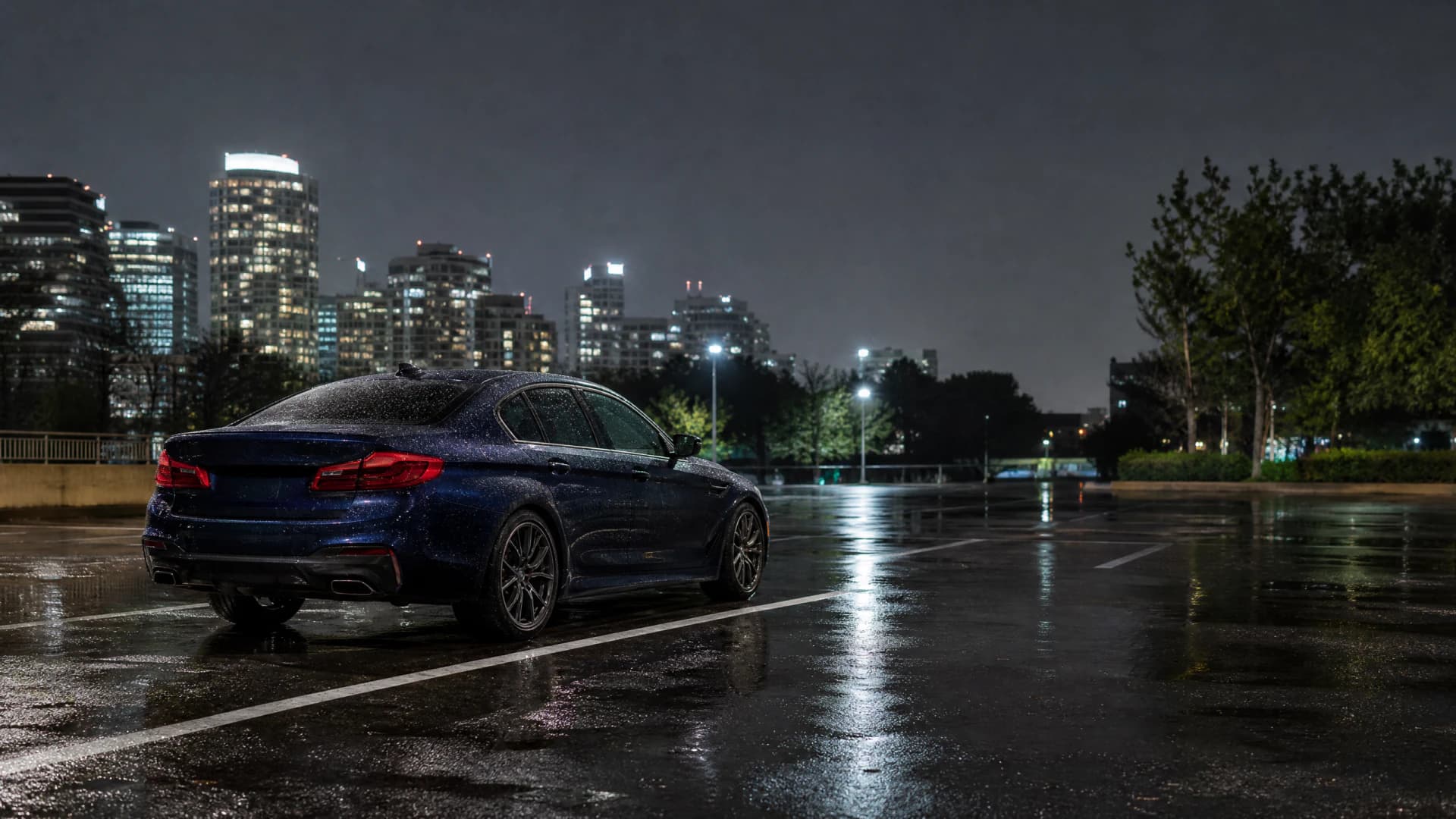
Luxury vehicles carry dramatically higher repair costs that insurers pass through to policyholders. A 2018 BMW 3 Series costs $240–$320/mo to insure for a teen driver compared to $160–$200/mo for a 2018 Honda Accord with similar safety ratings and performance. BMW-specific parts, specialized labor requirements, and higher theft rates for luxury badges all contribute to elevated claim costs. The same applies to Mercedes, Audi, Lexus, and Infiniti models, even when purchased used at prices comparable to mainstream brands.
Small, lightweight vehicles with poor crash test ratings should be avoided despite low purchase prices. The Mitsubishi Mirage, Nissan Versa (pre-2020 models), and Chevrolet Spark have below-average IIHS safety scores and offer minimal protection in moderate-overlap frontal crashes. While insurance premiums for these vehicles are low ($120–$160/mo for teen drivers), the injury risk in a serious collision outweighs the $30–$50/mo savings compared to a Honda Civic or Toyota Corolla with superior crash structures.
Full-size luxury SUVs (Cadillac Escalade, Lincoln Navigator, BMW X5) combine the worst of all factors: high theft rates, expensive repairs, performance-oriented powertrains, and comprehensive premiums driven by catalytic converter theft. Monthly insurance costs for adding a teen to a policy with one of these vehicles range from $350–$550 in most states, and some carriers will decline to offer coverage entirely if the teen is the primary driver of a vehicle valued over $60,000.
Frequently Asked Questions
Should I buy or lease a car for my teen driver?
Buying a 3–6 year old used vehicle is almost always more cost-effective than leasing for teen drivers. Lease agreements require full coverage insurance with low deductibles (typically $500 or less), which costs $180–$280/mo for a teen driver, while a purchased older vehicle allows you to drop collision coverage entirely once it's paid off, reducing premiums to $80–$120/mo for liability-only.
Do I have to add my teen to my insurance if they only drive occasionally?
Yes, in almost all states you must add your teen to your policy once they have a learner's permit or driver's license, even if they only drive occasionally. Most carriers consider any licensed household member a mandatory disclosed driver, and failing to add them can result in claim denials if your teen is involved in an accident while driving your vehicle.
Will buying a older car with no safety features save money on insurance?
Older cars without modern safety features cost 5–15% less in collision premiums due to lower repair costs, but you lose access to safety feature discounts (5–10% off) and telematics discounts (10–20% off) that often more than offset the savings. A 2012 vehicle without automatic emergency braking will typically cost the same or more to insure than a 2019 model with these features after all discounts are applied.
What's the cheapest way to insure a teen driver with their own car?
Keeping your teen on your existing policy as an additional driver is almost always cheaper than purchasing a separate policy in their name. The average standalone policy for a 16-year-old costs $400–$650/mo, while adding them to a parent's policy with multi-car and multi-policy discounts costs $150–$280/mo depending on the vehicle and state.
How much will my insurance go down when my teen turns 18?
Most carriers reduce teen driver premiums by 10–15% at age 18 and another 15–20% at age 19, assuming no accidents or violations. A teen who costs $200/mo to insure at age 16 will typically drop to $170–$180/mo at 18 and $140–$155/mo at 19, with the most significant decrease occurring at age 25 when young driver surcharges are fully removed.
Related Articles

Best Vehicles for Teen Drivers to Lower Insurance
4/11/2026

NC Teen Driver Insurance: Costs, Discounts & GDL Impact
4/7/2026
Stack Teen Driver Discounts: Re-Verification Guide
4/7/2026

Teen Driver Insurance in New Mexico: Costs & GDL Rules
4/7/2026

Teen Driver Insurance FAQ: Questions Parents Actually Ask
4/7/2026

Stack Every Discount for Teen Drivers | Parent Guide
4/11/2026